

My Blog

Medical Interpretation

Post-Menopausal Bleeding: A Warning Sign You Shouldn’t Ignore

A Powerful Reminder About Post-Menopausal Bleeding

Today, I watched a public health reel from Mayo Clinic featuring Dr. Jamie Bakkum-Gamez, a gynecologic oncologist. In the video, she emphasized that women experiencing post-menopausal bleeding—whether it’s brown, pink, or red, and even if it’s painless—should see their gynecologist for further evaluation. Her message, shared via Mayo Clinic’s official Instagram channel, was powerful and a timely reminder about the importance of post-menopausal health awareness.

Dr. Bakkum-Gamez also reminded viewers that menopause is officially defined as 12 months without regular menstrual cycle. So, any bleeding that occurs after that point—even light spotting—should be taken seriously and checked by a gynecologist.

It brought back a memory from an interpretation session I was part of. A woman had been experiencing heavy bleeding for six months after menopause. She told her gynecologist that she actually felt happy the first time it happened—thinking her period had come back. She continued to ignore the symptoms until the bleeding caused significant fatigue and exhaustion.

Eventually, she underwent a medical exam. The diagnosis was heartbreaking: advanced cervical cancer that had already spread.

This experience reinforced how crucial it is to seek medical attention at the first sign of abnormal bleeding after menopause. It could save your or your loved one’s life.


📌 About the Author
Yun Zhou-Wells is a certified medical interpreter with over 30 years of experience bridging communication between patients and healthcare providers. Passionate about women’s health and patient advocacy, she shares stories from her interpreting work to raise awareness and empower readers to take charge of their health.

💬 Let’s Keep the Conversation Going!
If this story resonated with you or if you have experiences to share about women’s health, please leave a comment below or connect with me on LinkedIn. Together, we can help spread awareness and support each other on the journey to better health.
Medical Interpretation

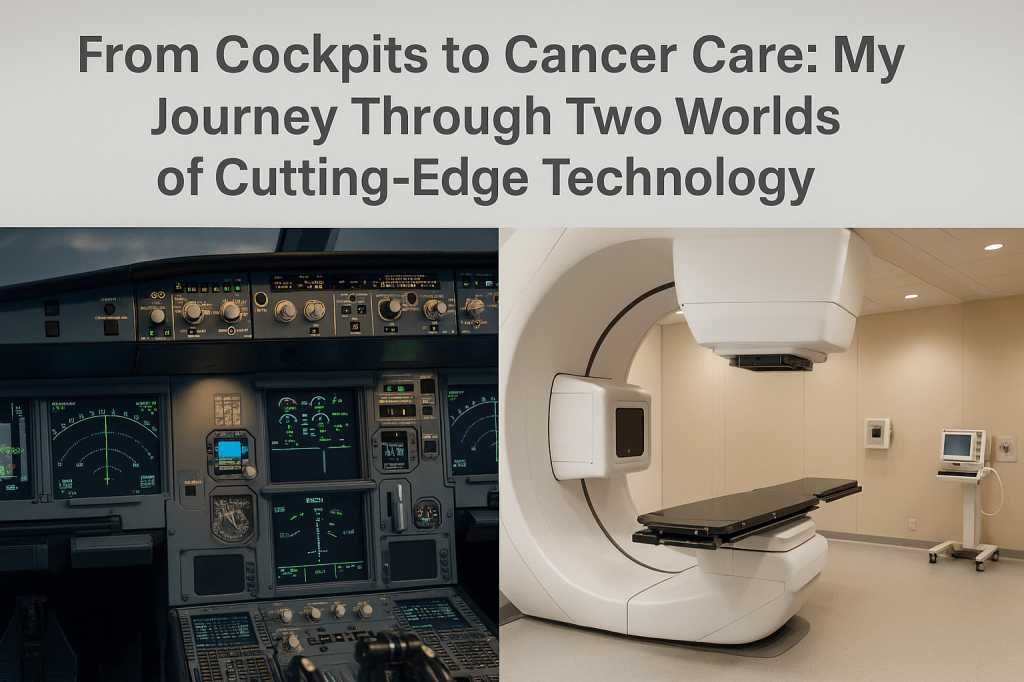
From Cockpits to Healthcare: My Journey Through Two Worlds of Cutting Edge Technology

When I first started my job as a flight interpreter for an airline, I was amazed by the fly-by-wire cockpit of the Airbus A320—state-of-the-art technology back in the 1990s. The “glass cockpit” had replaced traditional small round instrument gauges with digital displays. Pilots were no longer just manually flying with control sticks; they had become managers of sophisticated electronic systems, ensuring safe and efficient flights.

That experience left a lasting impression on me. I’ve always believed that whenever there’s a breakthrough in technology, it’s often first applied in aerospace and aviation. It felt like a privilege to be part of an industry that embraced and operated at the edge of technological innovation.

Now, 30 years later, I find myself once again exposed to a field where the world’s most advanced technology is making a profound impact—this time, in healthcare. In the fight against cancer, medical science has developed powerful tools like proton therapy and carbon ion radiation therapy.

Proton therapy uses positively charged atomic particles (protons) to target cancer cells, damaging their DNA while sparing surrounding healthy tissue. Carbon ion therapy, an even more advanced form of treatment, uses heavier carbon ions. These ions have a higher Linear Energy Transfer (LET) and Relative Biological Effectiveness (RBE) than protons, potentially offering better tumor control with less harm to nearby tissues.

I’ve recently learned the key differences between these two therapies. While both are remarkable in their precision, carbon ion therapy holds promise in treating certain cancers that are resistant to other forms of radiation. It’s exciting to witness this advancement being brought to the U.S.—Mayo Clinic in Jacksonville, Florida, is set to become the first medical center in North America to offer carbon ion therapy.

From interpreting in high-tech cockpits to facilitating communication in cutting-edge cancer treatment, I feel deeply honored to be part of these extraordinary frontiers. Technology continues to evolve, but the wonder and privilege of being close to its impact remain the same.

Aviation Interpretation

Inside the Cockpit

Photo by Burak Durma on Pexels.com

For over a decade, I worked for an airline in China, eventually becoming a certified interpreter for flight training programs. My role often placed me inside full-motion flight simulators, interpreting between English-speaking instructors and Chinese trainee pilots. These weren’t tourist flights, this was serious, technical, high-stakes communication.

I remember one session vividly. A pilot was flying a simulated emergency scenario—an engine failure after takeoff. The instructor gave rapid-fire instructions in English, and I had to keep up, delivering precise interpretation in real time. A single delay or error could derail the training or lead to confusion while regaining the airplane back in control after single engine failure. It was a job that required nerves of steel and a deep understanding of aviation terminology, airplane operation procedure and cultural dynamics.

For me, it combined everything I loved: language, learning, responsibility, and travel.

Aviation Interpretation

✈️ From the Cockpit to the Clinic: My Unlikely Journey as a Voice Across Borders

The cockpit was quiet, except for the low hum of simulated engines. I sat behind the instructor, headset on, watching the trainee pilot grip the controls with visible tension. My job wasn’t to fly the plane—but to be the voice carrying instructions, corrections, and sometimes urgent warnings between two languages. In that high-pressure moment, accuracy wasn’t just important—it was critical.

At the business negotiation table, the topics were just as complex: aircraft purchasing, financing, engine type selection, airline alliances, pilot training, marketing and more.

Years later, I found myself in a very different kind of high-stakes environment: a doctor’s office, a procedure room, or an emergency room. This time, I was no longer surrounded by switches and flight manuals, but by medical charts, physicians, and patients.

Today, at the business meeting table, the discussions are more deeply rooted in the world of healthcare—covering topics such as healthcare networks, global collaboration, expanding access to advanced medical care, and improving health equity for a broader patient population.

Once again, I am the voice in the middle—interpreting words that can make the difference between clarity and confusion, or comfort and fear.

This is the story of how I moved between two worlds: from a certified flight interpreter in China to a certified medical interpreter in the United States. Whether I’m bridging communication in a negotiation room or in a hospital, my goal remains the same—ensuring every word matters and every voice is heard.