
Medical Interpretation

Tiny Sounds, Big Meaning:

Metastasis vs. Metastases vs. Metastatic

In medical interpretation, accuracy is not just about words, it’s about sounds. Sometimes, a single syllable can completely change the meaning of a diagnosis. One area where this is especially important is oncology, the field of cancer care.

Here are three commonly confused terms that sound similar but carry very different meanings:

  • Metastasis /mə-ˈtas-tə-sis/ → the spread of cancer to one body organ
  • Metastases /mə-ˈtas-tə-sēz/ → the spread of cancer to multiple body organs
  • Metastatic /ˌmet-ə-ˈsta-tik/ → the adjective form, describing cancer that has spread

For interpreters, these distinctions are critical. Using the singular instead of the plural—or confusing the adjective with the noun—can mislead a patient and alter their understanding of their condition.

As interpreters, we are more than language bridges; we are accuracy advocates. Small pronunciation differences carry big meaning in oncology. Precision matters.

👉 What other medical terms have you found tricky to pronounce or easy to confuse? Share your thoughts—I’d love to hear from you.
Medical Interpretation

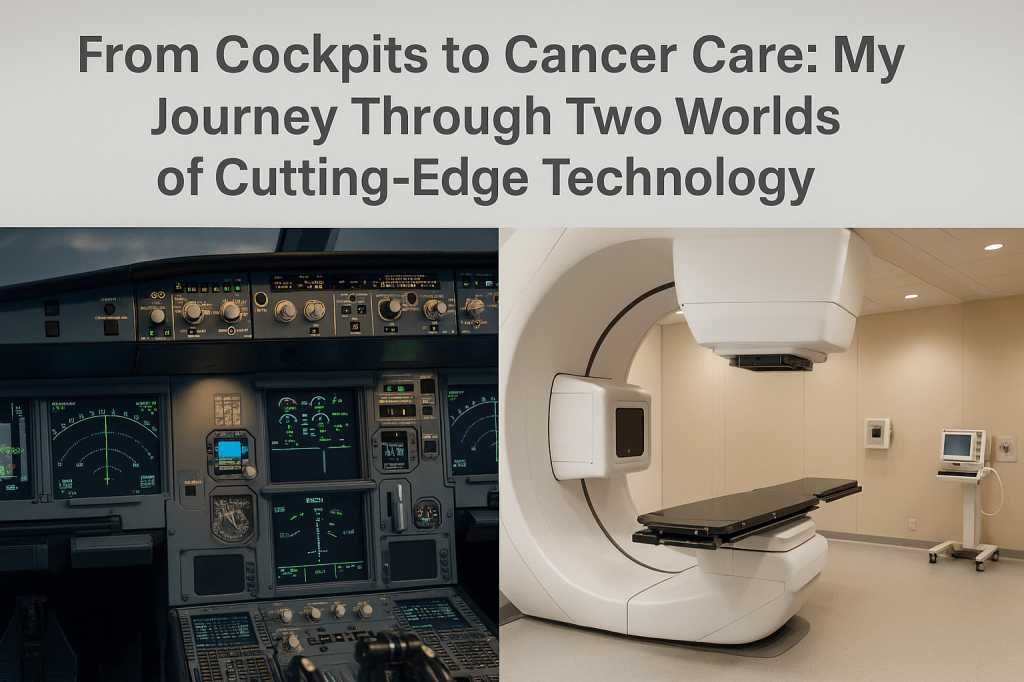
From Cockpits to Healthcare: My Journey Through Two Worlds of Cutting Edge Technology

When I first started my job as a flight interpreter for an airline, I was amazed by the fly-by-wire cockpit of the Airbus A320—state-of-the-art technology back in the 1990s. The “glass cockpit” had replaced traditional small round instrument gauges with digital displays. Pilots were no longer just manually flying with control sticks; they had become managers of sophisticated electronic systems, ensuring safe and efficient flights.

That experience left a lasting impression on me. I’ve always believed that whenever there’s a breakthrough in technology, it’s often first applied in aerospace and aviation. It felt like a privilege to be part of an industry that embraced and operated at the edge of technological innovation.

Now, 30 years later, I find myself once again exposed to a field where the world’s most advanced technology is making a profound impact—this time, in healthcare. In the fight against cancer, medical science has developed powerful tools like proton therapy and carbon ion radiation therapy.

Proton therapy uses positively charged atomic particles (protons) to target cancer cells, damaging their DNA while sparing surrounding healthy tissue. Carbon ion therapy, an even more advanced form of treatment, uses heavier carbon ions. These ions have a higher Linear Energy Transfer (LET) and Relative Biological Effectiveness (RBE) than protons, potentially offering better tumor control with less harm to nearby tissues.

I’ve recently learned the key differences between these two therapies. While both are remarkable in their precision, carbon ion therapy holds promise in treating certain cancers that are resistant to other forms of radiation. It’s exciting to witness this advancement being brought to the U.S.—Mayo Clinic in Jacksonville, Florida, is set to become the first medical center in North America to offer carbon ion therapy.

From interpreting in high-tech cockpits to facilitating communication in cutting-edge cancer treatment, I feel deeply honored to be part of these extraordinary frontiers. Technology continues to evolve, but the wonder and privilege of being close to its impact remain the same.