

Medical Interpretation

Pain Is Just the Tip of the Iceberg: Understanding Hormone-Related Steroid Concerns Among Chinese Patients

疼痛只是冰山一角:理解中国患者对激素类药物的顾虑

In medical interpretation, one of the most delicate challenges is bridging language and cultural perception of medication and treatment.

Many patients with knee, neck, or shoulder pain may hesitate when offered steroid injections. In Chinese culture, steroids are often associated with hormones, and patients often worry about disrupting the body’s internal balance—even when pain is significant.

This hesitation is not defiance; it reflects a cultural mindset where long-term internal health is prioritized over short-term relief. Understanding this perspective is essential for interpreters, patients, and healthcare providers alike.

The Clinical Perspective: Why Steroid Injections Are Recommended

Steroid injections are widely used in U.S. clinical practice to:

  • Reduce inflammation in joints or nerves, often the underlying cause of pain
  • Improve mobility and daily function
  • Provide short-term relief while the body heals or other treatments take effect

Doctors often explain that pain is only the tip of the iceberg—treating inflammation early can prevent worsening or chronic damage.

However, many Chinese patients hear “steroid (类固醇 / 激素)” and immediately think hormone medicine. They worry it will disrupt the body’s internal system (影响体内系统) or harm organs. Even when the doctor explains local use with minimal systemic effects, this association often causes hesitation.

The Patient Perspective: Understanding the Concerns

Chinese patients often prioritize long-term internal health over immediate symptom relief:

  • They are cautious about anything perceived as hormone-related (激素 / 类固醇)
  • They worry about disturbing the body’s internal balance
  • Pain is often tolerated until it becomes severe

Recognizing this mindset helps patients feel understood and respected, which supports shared decision-making and adherence to treatment plans.

The Role of Interpreters

Medical interpreters play a key role in bridging not only language, but also cultural nuances. By helping patients express concerns clearly and assisting clinicians in understanding cultural priorities, interpreters:

  • Ensure communication is effective and respectful
  • Reduce misunderstandings related to treatment decisions
  • Support culturally sensitive care that benefits patients and providers alike

Tips for Better Communication

For Chinese Patients:

  • Express concerns explicitly: “我担心类固醇是激素,会影响体内系统” (I am concerned steroids, as hormones, may affect my internal system).
  • Ask for details about dosage, local vs. systemic effect, frequency, and reversibility.
  • Understand that local steroid injections are not the same as long-term hormone therapy.

For U.S. Clinicians:

  • Acknowledge patient concerns before explaining efficacy: “I understand your concern about hormone effects on your body.”
  • Emphasize local vs. systemic use and explain minimal hormone impact.
  • Offer clear monitoring guidelines to reassure patients.

Consulting Insight

Understanding cultural mindsets is key to improving patient engagement and treatment outcomes. Healthcare organizations can benefit from training staff and integrating professional interpreters who navigate both language and cultural nuances. This not only supports patients but also enhances clinician effectiveness and overall care quality.

Conclusion

Medical interpretation is more than translating words—it’s translating cultural mindset and reasoning. Chinese patients’ hesitation toward steroids is often rooted in the association with hormones, not defiance. By understanding this perspective, interpreters, clinicians, and patients can work together to make informed, culturally sensitive treatment decisions.

Medical Interpretation

Post-Menopausal Bleeding: A Warning Sign You Shouldn’t Ignore

A Powerful Reminder About Post-Menopausal Bleeding

Today, I watched a public health reel from Mayo Clinic featuring Dr. Jamie Bakkum-Gamez, a gynecologic oncologist. In the video, she emphasized that women experiencing post-menopausal bleeding—whether it’s brown, pink, or red, and even if it’s painless—should see their gynecologist for further evaluation. Her message, shared via Mayo Clinic’s official Instagram channel, was powerful and a timely reminder about the importance of post-menopausal health awareness.

Dr. Bakkum-Gamez also reminded viewers that menopause is officially defined as 12 months without regular menstrual cycle. So, any bleeding that occurs after that point—even light spotting—should be taken seriously and checked by a gynecologist.

It brought back a memory from an interpretation session I was part of. A woman had been experiencing heavy bleeding for six months after menopause. She told her gynecologist that she actually felt happy the first time it happened—thinking her period had come back. She continued to ignore the symptoms until the bleeding caused significant fatigue and exhaustion.

Eventually, she underwent a medical exam. The diagnosis was heartbreaking: advanced cervical cancer that had already spread.

This experience reinforced how crucial it is to seek medical attention at the first sign of abnormal bleeding after menopause. It could save your or your loved one’s life.


📌 About the Author
Yun Zhou-Wells is a certified medical interpreter with over 30 years of experience bridging communication between patients and healthcare providers. Passionate about women’s health and patient advocacy, she shares stories from her interpreting work to raise awareness and empower readers to take charge of their health.

💬 Let’s Keep the Conversation Going!
If this story resonated with you or if you have experiences to share about women’s health, please leave a comment below or connect with me on LinkedIn. Together, we can help spread awareness and support each other on the journey to better health.

Medical Interpretation

From Cockpits to Healthcare: My Journey Through Two Worlds of Cutting Edge Technology

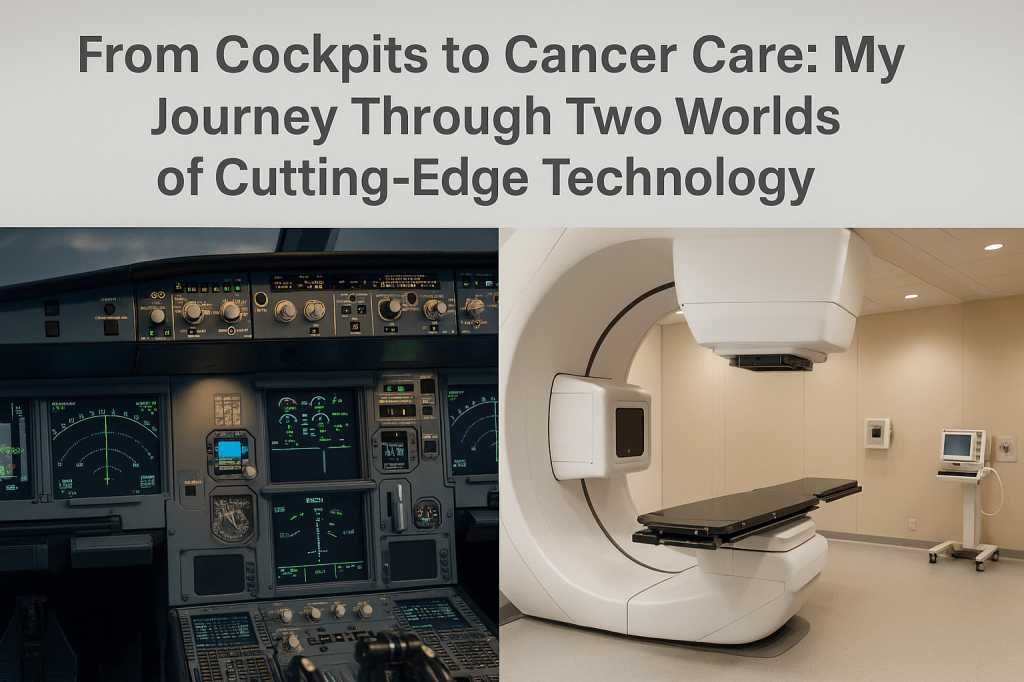
When I first started my job as a flight interpreter for an airline, I was amazed by the fly-by-wire cockpit of the Airbus A320—state-of-the-art technology back in the 1990s. The “glass cockpit” had replaced traditional small round instrument gauges with digital displays. Pilots were no longer just manually flying with control sticks; they had become managers of sophisticated electronic systems, ensuring safe and efficient flights.

That experience left a lasting impression on me. I’ve always believed that whenever there’s a breakthrough in technology, it’s often first applied in aerospace and aviation. It felt like a privilege to be part of an industry that embraced and operated at the edge of technological innovation.

Now, 30 years later, I find myself once again exposed to a field where the world’s most advanced technology is making a profound impact—this time, in healthcare. In the fight against cancer, medical science has developed powerful tools like proton therapy and carbon ion radiation therapy.

Proton therapy uses positively charged atomic particles (protons) to target cancer cells, damaging their DNA while sparing surrounding healthy tissue. Carbon ion therapy, an even more advanced form of treatment, uses heavier carbon ions. These ions have a higher Linear Energy Transfer (LET) and Relative Biological Effectiveness (RBE) than protons, potentially offering better tumor control with less harm to nearby tissues.

I’ve recently learned the key differences between these two therapies. While both are remarkable in their precision, carbon ion therapy holds promise in treating certain cancers that are resistant to other forms of radiation. It’s exciting to witness this advancement being brought to the U.S.—Mayo Clinic in Jacksonville, Florida, is set to become the first medical center in North America to offer carbon ion therapy.

From interpreting in high-tech cockpits to facilitating communication in cutting-edge cancer treatment, I feel deeply honored to be part of these extraordinary frontiers. Technology continues to evolve, but the wonder and privilege of being close to its impact remain the same.